
What are the pollution emission control standards for waste incinerators?
 |
|---|
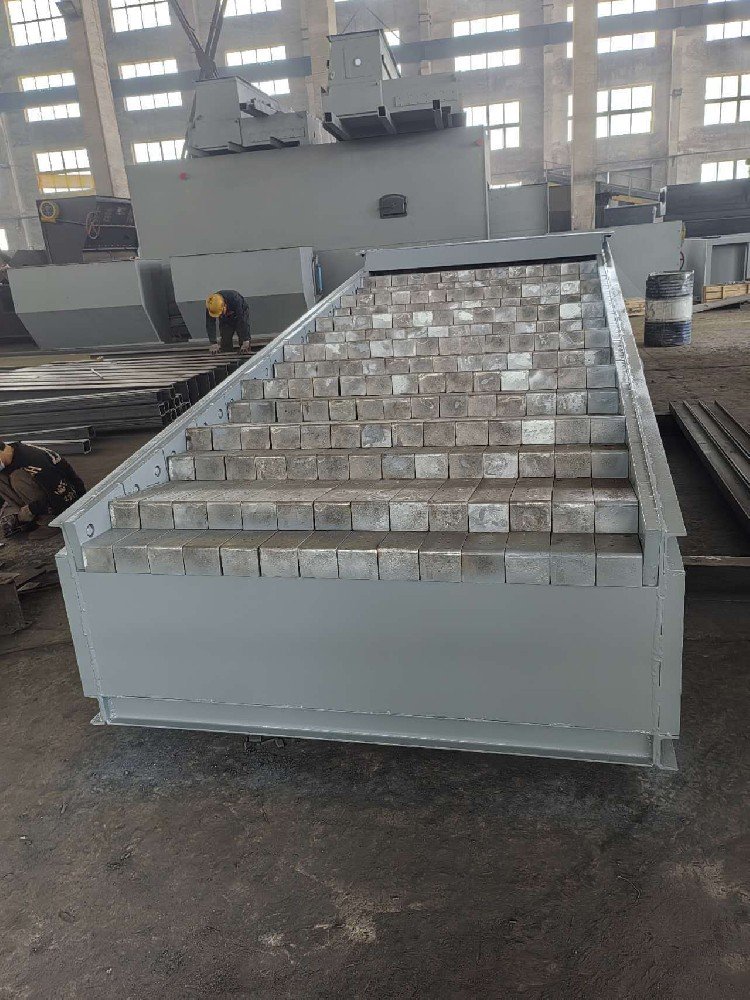
| 30 t/d municipal solid waste incineration grate |
Flue gas emission indicators
Particulate matter: according to the “Standard for Pollution Control on the Municipal Solid Waste Incineration” (GB 18485-2014), the 1-hour average emission limit is 30 mg/m³, and the 24-hour average is 20 mg/m³.
Sulfur dioxide: the 1-hour average emission limit is 100 mg/m³, and the 24-hour average is 80 mg/m³.
Nitrogen oxides: the 1-hour average emission limit is 300 mg/m³, and the 24-hour average is 250 mg/m³.
Hydrogen chloride: the 1-hour average emission limit is 60 mg/m³, and the 24-hour average is 50 mg/m³.
Carbon monoxide: the 1-hour average emission limit is 100 mg/m³, and the 24-hour average is 80 mg/m³.
Dioxins: the emission limit is 0.1 ng TEQ/m³.
Heavy metals: the emission limit for mercury and its compounds (calculated as Hg) is 0.05 mg/m³; for cadmium, thallium and their compounds (calculated as Cd+Tl) it is 0.1 mg/m³; and for antimony, arsenic, lead, chromium, cobalt, copper, manganese, nickel and their compounds (calculated as Sb+As+Pb+Cr+Co+Cu+Mn+Ni) it is 1.0 mg/m³.
Combustion condition control
Temperature: the incineration temperature in the incinerator furnace must not be lower than 850°C, and the flue gas in the secondary combustion chamber should remain at not lower than 850°C for a residence time of no less than 2 seconds, to ensure the thorough decomposition of harmful substances.
Turbulent flow and excess oxygen: it is necessary to maintain turbulent flue gas flow and an appropriate excess of oxygen, so that the incineration system operates under rated conditions, minimizing the concentration of original emissions and ensuring the complete decomposition of organic substances such as dioxins.
Odorous gas emission control
Waste transport: compacting transport vehicles with good sealing and automatic loading and unloading structure should be used to transport waste, so as to minimize the escape of odor.
Unloading stage: an air curtain should be installed at the entrance and exit of the waste unloading hall, and the electric unloading doors should be closed before and after the waste transport vehicle unloads, to prevent odor from escaping.
Waste pit treatment: the waste pit should adopt a sealed design, with suction openings installed above the waste pit to draw the odorous gas into the incinerator as combustion air for high-temperature decomposition, and to keep the waste pit and the unloading hall in a negative-pressure state.
Standby facilities: standby activated carbon exhaust gas purification facilities should be provided. During a full-plant shutdown for maintenance, the odor in the waste pit must be purified by the activated carbon exhaust gas purification facilities to meet the standard before it can be discharged.
Wastewater discharge control
The wastewater of a waste incineration plant mainly comes from leachate, wastewater from washing the unloading hall and vehicles, and the like. This wastewater needs to be treated before discharge to meet the standard, generally in accordance with the requirements of standards such as the “Integrated Wastewater Discharge Standard” (GB 8978-1996), in which indicators such as chemical oxygen demand (COD), biochemical oxygen demand (BOD), ammonia nitrogen and suspended solids all have corresponding emission limits.
Bottom ash and fly ash control
Bottom ash: after high-temperature harmless treatment, the bottom ash produced by waste incineration can be separated by processes such as magnetic separation and then be comprehensively utilized; the portion that cannot be comprehensively utilized can be sent to a sanitary landfill for disposal.
Fly ash: all devices in the fly ash collection, storage and treatment system should remain sealed. When the flue gas purification system removes acidic gases by the dry or semi-dry method, the fly ash treatment system should adopt corresponding treatment measures such as mechanical deacidification, and the fly ash must be managed and disposed of in accordance with the requirements for hazardous waste.
Monitoring and supervision requirements
Online monitoring: online monitoring of incinerator operating conditions should be achieved, and the monitored items should at least include the incineration temperature, furnace pressure, oxygen content at the flue gas outlet and carbon monoxide content, with a sign erected in a conspicuous position that automatically displays the main operating parameters of the incinerator and the online monitoring data of the main flue gas pollutants. At the same time, automatic continuous online monitoring of flue gas should be realized, and the monitored items should at least include hydrogen chloride, carbon monoxide, soot, sulfur dioxide, nitrogen oxides and the like, and should be networked with the local sanitation and environmental protection authorities to achieve real-time data transmission.
Operation management: a waste incineration plant should establish a sound operation management system to ensure the effective implementation of all environmental protection measures. The amount of waste stored in the waste storage pit should be monitored regularly, and effective measures should be taken to drain the leachate from the waste storage pit.
Supervision and management: the relevant departments will conduct regular inspections and unscheduled spot checks on waste incineration plants to ensure that their pollution emissions meet the standard requirements. If violations such as exceeding the emission standards are found, penalties will be imposed in accordance with the law and rectification within a time limit will be required.