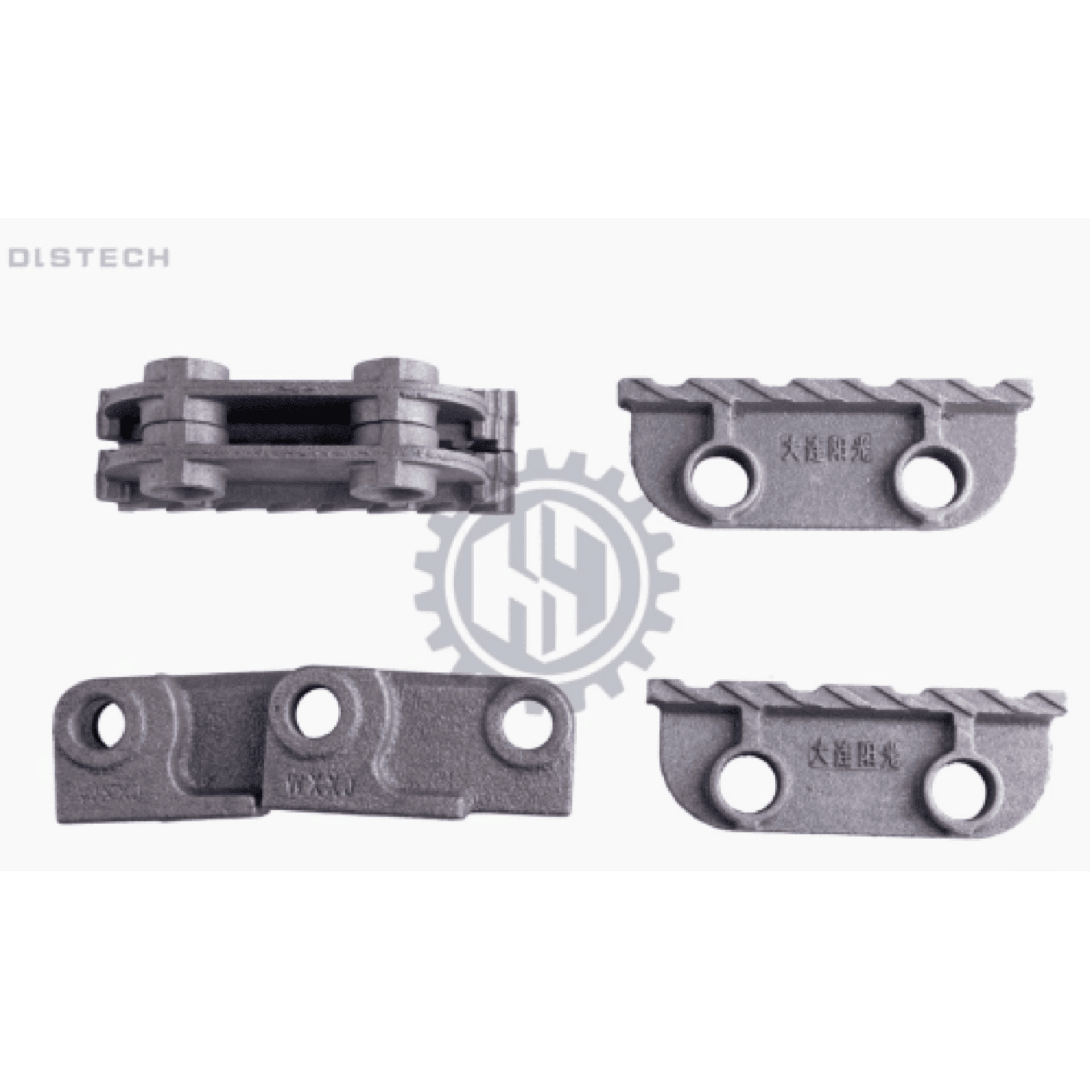

Characteristics of cast iron grates
Cast iron:
Good wear resistance: for example, during the operation of a grate, through prolonged contact and friction with fuel and the like, the surface of cast iron can resist wear to a certain extent and maintain a good service state. For instance, common gray cast iron grates, when used in equipment such as small chain grate boilers, can work for a long time under normal operating conditions without severe wear failure.
Excellent vibration damping: it can absorb and cushion the vibration and impact generated during operation, which is important for a component like a grate that needs to run smoothly and avoid problems such as loose connections caused by vibration. For example, when the grate motor starts or stops, or when the load fluctuates, a cast iron grate can rely on its good damping properties to keep the overall structure stable.
Good machinability: it can be conveniently machined, turning the cast blanks into finished grate products that meet precise dimensional requirements and surface quality, which is conducive to subsequent installation and commissioning.
Relatively low strength: however, its compressive strength is acceptable and can meet the requirements of some operating conditions in bearing a certain fuel weight and furnace pressure, but its tensile strength and toughness are inferior to cast steel. Therefore, it has certain limitations in some large grate application scenarios that bear large tensile forces and impact.
Certain limitation in heat resistance: when used for a long time in high-temperature environments, cast iron may suffer from growth, deformation and other problems. For example, in some high-temperature, high-pressure large industrial boiler grate applications, if the temperature continuously exceeds its suitable range (such as ordinary gray cast iron above about 800°C), the performance will decline noticeably.
Composition: it mainly consists of iron, carbon, and some impurity elements such as silicon, manganese, sulfur and phosphorus. Among them, the carbon content is relatively high, generally around 2%–4%, which gives cast iron good casting performance and makes it relatively easy to cast into grate components of various complex shapes.