
What is the processing capacity of a small waste incinerator?
The processing capacity of a vertical small waste incinerator varies with the model, design and manufacturer. In general, such incinerators are designed to efficiently handle relatively small volumes of waste, making them suitable for use in areas with limited space such as cities and rural areas, as well as for treating specific types of waste such as household waste, medical waste or certain industrial waste.
As for the specific processing capacity, the throughput of a vertical small waste incinerator is usually measured by the weight of waste it can handle per hour or per day. Some advanced incinerator models may support customized throughput to meet the needs of different customers. For example, some medical waste incinerators can handle between 1 and 20 tons (or even a larger customized capacity), but for small vertical units the throughput is generally more modest.
In addition, vertical small waste incinerators focus not only on processing capacity but also on efficiency, energy saving, environmental friendliness and safety. They usually adopt high-temperature incineration technology, which can quickly and thoroughly convert waste into ash while reducing the generation and emission of harmful gases. Some advanced models can even achieve pollution-free emissions and incorporate heat recovery and reuse functions, using the heat to produce hot water, steam and the like, which has energy utilization value.
In short, the processing capacity of a vertical small waste incinerator is a relatively flexible concept that depends specifically on the model, design and manufacturing standards of the equipment. When selecting such equipment, it is advisable to consider the actual requirements, budget and environmental requirements in a comprehensive way, and to consult a professional manufacturer or supplier for accurate information and advice.
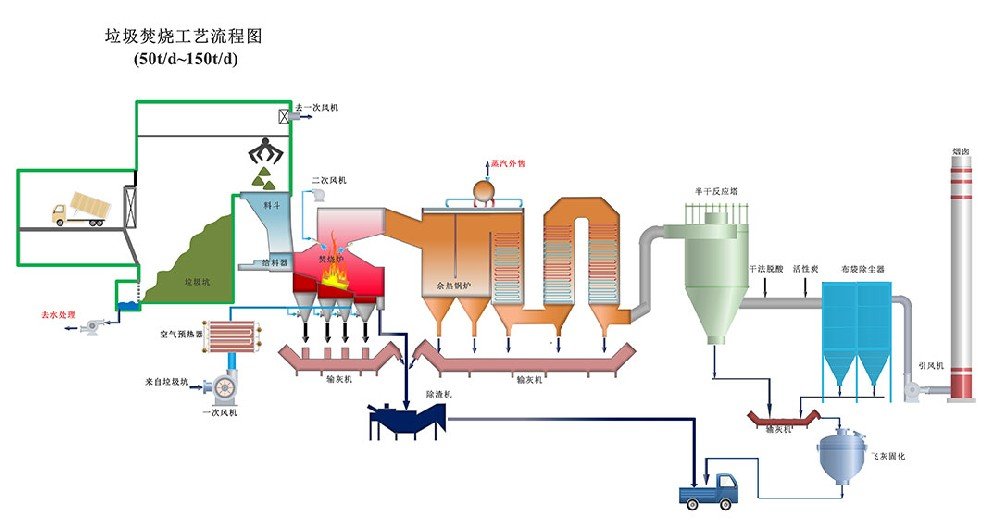
The following is a diagram of our waste incineration system