
How to Protect Grates and Furnace Walls from Excessively High Temperatures When Incinerating High-calorific-value, Lightweight Solid Waste
How to protect grates and furnace walls from excessively high temperatures when incinerating high-calorific-value, lightweight solid waste
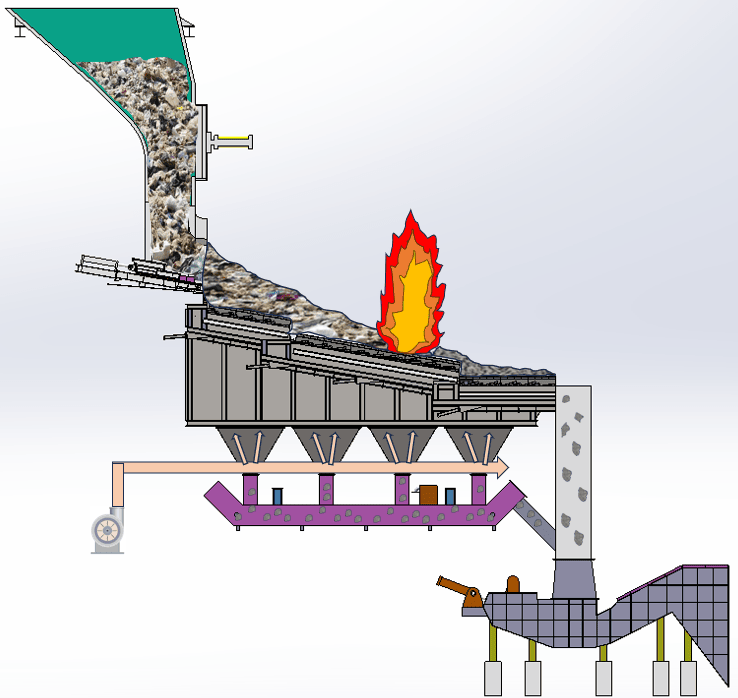
When incinerating high-calorific-value, lightweight solid waste, the problem of excessively high furnace temperatures damaging the grates and furnace walls needs to be addressed through effective protection in multiple dimensions, including material upgrades, structural optimization, and operational control:
I. Selection of refractory and insulating materials
Furnace wall refractory layer: use high-alumina bricks or silicon carbide composite materials as the lining to resist erosion by high-temperature molten slag;
Grate material: use high-temperature alloy steel;
II. Structural design and cooling system
Enhanced heat-dissipation design
Combustion chamber optimization: adopt a stepped grate plus rotating arch structure to promote tumbling of the material and avoid localized accumulation and overheating;
III. Temperature control and operation management
Precisely regulate the air volume to avoid overheating; waste-heat recovery and utilization: install a waste-heat boiler or steam generator; real-time monitoring and maintenance
IV. Process adaptability adjustment
Raw material pretreatment and layered feed control: adopt a multi-stage feeding system
Through the comprehensive measures above, long-term stable operation of the grates and furnace walls can be achieved under high-calorific-value conditions, while improving energy utilization efficiency. If you encounter any other practical problems in your applications, feel free to message me privately.